

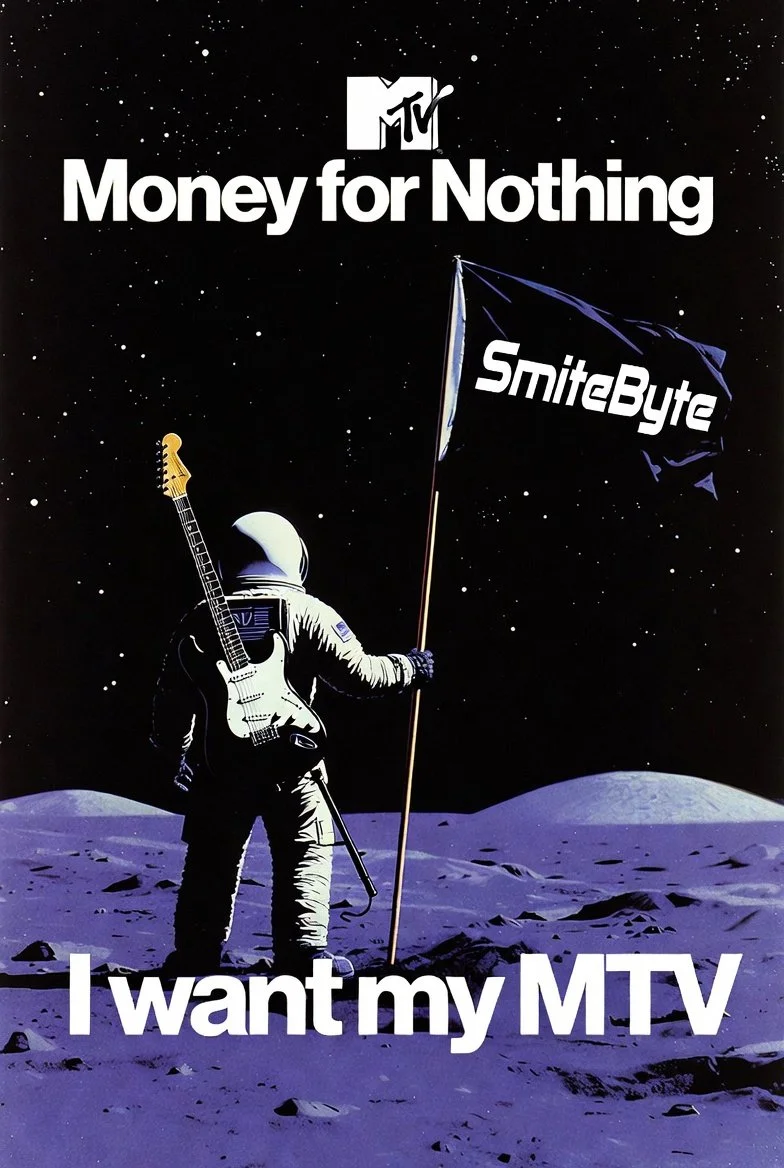
Medical Practices: Money for Nothing and Your Checks for Free
Logical realities for medical practice in 2026:
Attackers' costs are minimal: tools and initial access (often via brokers or free kits) range from $0–$3,000, with scalable methods allowing one operator to target dozens of practices for disproportionate returns.
Patient records have high, permanent market value: complete files with IDs and insurance details trade for $500–$1,000 each.
Initial access remains reliably achievable: phishing* against time-pressed staff succeeds consistently as the leading entry method (involved in 37-70%+ of breaches per 2025 reports, even after annual training); one credential harvest opens the door.
Dwell times** average 200+ days in healthcare—meaning undetected presence compounds daily as new patient volume flows in.
Well-resourced organizations are routinely compromised: Change Healthcare (190M records) and Yale New Haven (5.6M records) prove scale and budget do not prevent breach.
Most attacks now prioritize quiet exfiltration*** (only ~34% encrypt files anymore); data is removed and monetized regardless of ransom.
Consequences are predictable and escalating: HIPAA/CMIA settlements routinely exceed $100k even with reasonable safeguards; cyber premiums rise 50-200% post-incident while coverage tightens.
Pure prevention strategies show consistent failure rates across the sector.
Therefore: assume ongoing presence and prioritize rapid detection—the only move that interrupts the accumulating loss in time.
*Phishing: deceptive emails (or texts/calls) tricking staff into clicking links or sharing credentials—still the top initial vector despite training, because humans under pressure make mistakes.
**Dwell time: the period from initial entry to
***Exfiltration: the quiet theft and removal of your data to attackers' servers.
Your urgent care thrives on speed and volume: patients choose you over multi-hour ER waits because you deliver 15-30 minute visits. The systems enabling that efficiency—rapid intake with instant insurance scans and saved payment methods, complaint-driven templates charting 80% of visits in under 60 seconds, real-time multi-user access, automated SMS reminders—are also generating a constant stream of high-value records. A busy location adds thousands of charts annually, each rich with driver’s licenses, policy numbers, diagnoses, and prescriptions.
Given the established illicit value and phishing's persistent success against staff handling insurance workflows, initial access is not speculative—it's a matter of timing.
The economics for attackers are brutally asymmetric: for an upfront investment as low as a few dollars (or nothing, using leaked tools), they gain access that can yield tens or hundreds of thousands—whether through data sales or extortion. Scalable toolkits mean one actor can pursue one practice or twenty simultaneously, with minimal added effort.
Once achieved, the sector's long average dwell time allows attackers to operate undetected while your daily patient flow continues. They leverage the same real-time integrations and endpoint access that keep your clinic moving, exfiltrating gradually—often starting within days. Every new chart, scanned ID, saved card token, or SMS thread adds to the accumulating haul. The longer the presence persists, the larger the eventual exposure.
Large-scale breaches (Change Healthcare disrupting national claims, Yale New Haven losing millions of records) confirm that certifications, vendor partnerships, and compliance efforts do not halt this sequence. Practices running optimized urgent care stacks face the same trajectory—only compressed by higher throughput.
When detection finally occurs—often months in—the consequences compound immediately: mandatory notifications, regulatory investigations, six-figure settlements, premium spikes that strain viability, and patient attrition in a volume-dependent business.
The old medical wisdom—“an ounce of prevention is worth a pound of cure”—still holds for basics like training and firewalls. But in 2026 cybersecurity, prevention alone fails reliably against determined attackers. The evidence demands the complementary cure: rapid detection to catch and stop them once inside.
Smitebyte Blackbox provides precisely that capability: an agentless, on-premises network detection appliance that passively monitors traffic to identify the unavoidable artifacts of modern attacks—beaconing patterns, anomalous east-west lateral movement, and exfiltration flows—that even fileless or living-off-the-land techniques generate when communicating or moving data. (Note: many modern attacks skip traditional encryption—locking your files with a "ransom note," which is noisy and often defeated by backups—in favor of quiet data theft; this is different from credit card encryption, which securely protects individual transactions.)
By baselining your clinic’s normal workflow and correlating real-time packet-level insights (without endpoint agents or system access), Blackbox detects persistence and interruption opportunities early, enabling rapid response—isolation via existing firewall rules or containment—all at a cost far below the predictable post-breach financial impact.
The incentives for attackers are structural and ongoing. Your daily patient volume only increases their return.
In the sciences, we review the evidence, weigh the risks, commit to “do no harm,” and choose the intervention that best suits current conditions and the foreseeable future.
The same disciplined approach applies here.
Smitebyte Blackbox offers exactly that measured layer—agentless visibility that strengthens defenses quietly in the background, giving you the confidence that every reasonable step has been taken to protect what your patients have entrusted to you.
-St. Paul @ SmiteByte